


When the line stops, every minute costs money. Your data should not be the reason.
Manufacturing leaders are under pressure to reduce downtime, control input costs, hit quality targets, and deliver on time, all while navigating supply chain volatility and rising customer expectations. The data to do all of this already exists across your OT systems, ERP, quality platforms, and supplier networks. LakeStack unifies it into a single, governed foundation so operations, finance, and executive leadership can see the full picture and act on it.


Your OT and IT data live in separate worlds. That gap is costing you.
Factory floor systems and enterprise systems have never spoken the same language. That silence has a price: unplanned downtime, reactive maintenance, and supply chain surprises that could have been avoided.
SCADA, MES, and sensor data sits in operational systems that never connect to analytics platforms. Equipment failure signals are there, buried in telemetry. By the time a problem surfaces, the line is already down.
Procurement, inventory, and supplier performance data exist across different systems, updated on different schedules. By the time the ERP refreshes, the decision that needed that data was already made, usually wrong.
Quality data from inspection systems and production lines is captured but not connected to process parameters, supplier batches, or shift data. Root cause analysis takes days. The same defect recurs because the pattern was never visible.
A unified operational data foundation built for the factory floor
LakeStack bridges OT and IT data into a single governed layer. Every use case below runs on the same foundation, continuously updated from every system in your operation.
LakeStack connects SCADA, PLC, MES, and IoT sensor data into a unified asset health foundation. Maintenance teams and AI models see equipment performance trends, vibration signatures, temperature anomalies, and cycle time degradation, all before a failure occurs. Operations leaders get OEE dashboards that update in real time, not the next morning.
- Predict equipment failures days before they cause line stoppages
- Track OEE by line, shift, and asset class in real time
- Quantify the cost impact of downtime by production run and product mix

Procurement, inventory, supplier, and logistics data are unified so supply chain leaders see actual lead times, supplier reliability scores, and inventory coverage in one place. When a supplier misses a delivery or a component goes critical, the impact on production schedules is visible immediately, not after the shortage hits the floor.
- Reduce stockouts and overstock with real-time inventory and demand signals
- Score supplier performance across on-time delivery, quality, and cost
- Model supply chain disruption scenarios before they affect production
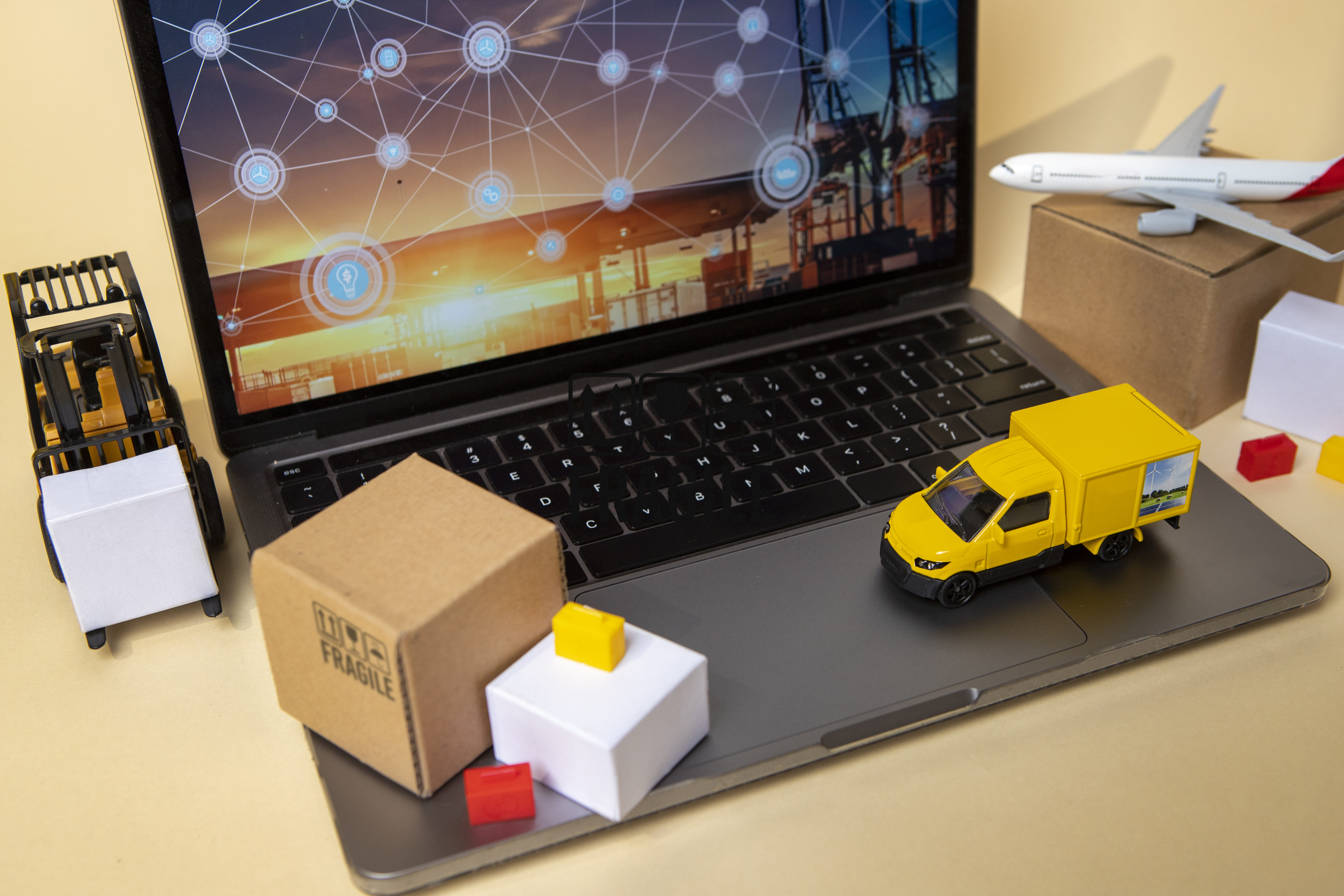
Inspection data, process parameters, supplier batch records, and shift information are unified so quality teams can trace a defect from the customer complaint back to the raw material batch, the production line setting, and the operator shift. SPC control charts update in real time. Nonconformance trends are visible before they become customer escapes.
- Reduce cost of poor quality with root cause analytics across production data
- Enable real-time SPC monitoring across lines, shifts, and facilities
- Automate traceability documentation for regulatory and customer audits

Production planning, scheduling, capacity, and actual output data are unified so operations leaders see where variances are building before the shift ends. Capacity constraints, changeover inefficiencies, and scheduling conflicts become visible in time to act. Finance and operations align on the same production numbers without waiting for the weekly roll-up.
- Identify throughput bottlenecks before they compound across shifts
- Align production actuals with finance forecasts in real time
- Reduce changeover time with data-driven scheduling optimization

Industrial AI fails most often because sensor data and production data have never been unified at the quality required for modeling. LakeStack ensures the data feeding SageMaker models, Bedrock applications, and QuickSight dashboards is clean, governed, and continuously current. AI initiatives in manufacturing move from lab to line because the data foundation is reliable enough to build on.
- Deploy predictive maintenance models on governed, continuously updated OT data
- Enable natural-language queries across production and quality data for plant managers
- Accelerate AI initiatives from pilot plant to full production rollout

Governed data across OT, IT, and the supply chain boundary
Manufacturing data carries IP sensitivity, regulatory obligations, and supplier confidentiality requirements that most analytics platforms were not designed for.

Operational technology data from SCADA and MES systems is governed from the point of ingestion. Sensitive process parameters, formulations, and IP-critical production data are masked or access-controlled before they reach any analytical environment. Your competitive advantage stays where it belongs.

Data sharing with suppliers, contract manufacturers, and third-party logistics providers is governed by policy, not by trust. Access controls define exactly what each external party can see, and every data exchange is logged and auditable.

ISO 9001, IATF 16949, FDA 21 CFR Part 11, and customer-specific quality requirements all depend on traceable, documented data. LakeStack maintains full lineage from source system to final report, so audit requests are answered in hours, not weeks.
Every system across your plant and enterprise, unified
LakeStack connects OT systems, enterprise platforms, quality tools, and supply chain data into one governed foundation, without replacing any source system.

- SCADA and DCS systems
- MES platforms (Siemens, Rockwell)
- IoT sensors and PLCs
- Historian databases (OSIsoft PI)
- SAP ERP and S/4HANA
- Oracle Manufacturing Cloud
- Procurement and supplier portals
- WMS and inventory systems

- LIMS and quality management systems
- Inspection and CMM data
- Nonconformance and CAPA systems
- Supplier quality portals

- TMS and logistics platforms
- Demand planning systems
- Supplier EDI and API feeds
- 3PL and freight data
What connected manufacturing data delivers
Measurable results across OEE, quality, supply chain, and cost that manufacturing and finance leadership can put in front of the board.
Supply chain & logistics analytics unified across 8+ relational sources for real-time ops





Applify holds AWS Manufacturing and Industrial Services Competency, reflecting deep expertise in connecting OT and IT environments, securing industrial data, and delivering production-grade analytics at enterprise scale.
- Supports Agentic AI using Bedrock and SageMaker
- Uses Apache Iceberg open table format
- Enforces Lake Formation fine-grained governance
- Handles schema drift automatically every time
- Provides built-in active metadata and lineage
- Features self-healing real-time pipelines
- Eliminates all third-party tool dependencies
- Enables query flexibility with any engine
- Ensures full data sovereignty and control
- Offers automatic sensitive data classification
The full LakeStack platform, built for manufacturing

Frequently asked questions
LakeStack uses read-only connections to OT systems, including SCADA historians, MES platforms, and PLC data feeds. There is no write-back to production systems and no impact on OT network performance. Connectivity is typically achieved through secure DMZ-based data transfer agents that do not require changes to plant floor network topology.
Yes. Multi-plant manufacturers commonly run different ERP instances, MES platforms, and OT systems across their network. LakeStack connects each source independently and applies common data models so that OEE, quality, and cost metrics are calculated consistently across all sites, regardless of the underlying system.
For manufacturers with existing MES and ERP connectivity, initial OEE dashboards can be operational in weeks rather than months. The exact timeline depends on the number of source systems, data quality, and the complexity of KPI definitions, but LakeStack is designed to deliver early value quickly rather than requiring a full platform build before anything is usable.
Yes. LakeStack handles both batch process manufacturing, where lot and batch traceability are critical, and discrete manufacturing, where individual unit and serialization tracking matter. Common data models and transformation logic are adapted to the specific requirements of each production model.
Process parameters, formulations, and tooling data that represent competitive IP are governed through field-level encryption and role-based access controls. Analysts and external partners see only what their role permits. Every access event is logged. Sensitive data can be excluded entirely from analytical environments if required.
LakeStack implementations typically start with a priority plant or use case, deliver measurable value quickly, and then expand across the network. The foundation built for one plant, including connector configurations, data models, and governance policies, is reused for subsequent plants, which significantly reduces the time and cost of expansion.
The data to run your plants better already exists. Let us connect it.
LakeStack unifies OT and IT data across your plants, lines, and supply chain into a governed foundation that cuts downtime, reduces cost, and makes AI-driven manufacturing operations possible today, not in three years.


