


Turn your business data into powerful, AI-driven use cases
Once your data is structured and governed, it should be usable everywhere without rebuilding pipelines. LakeStack removes the need for separate data flows for BI, APIs, and AI, so every use case runs on the same live, governed data.
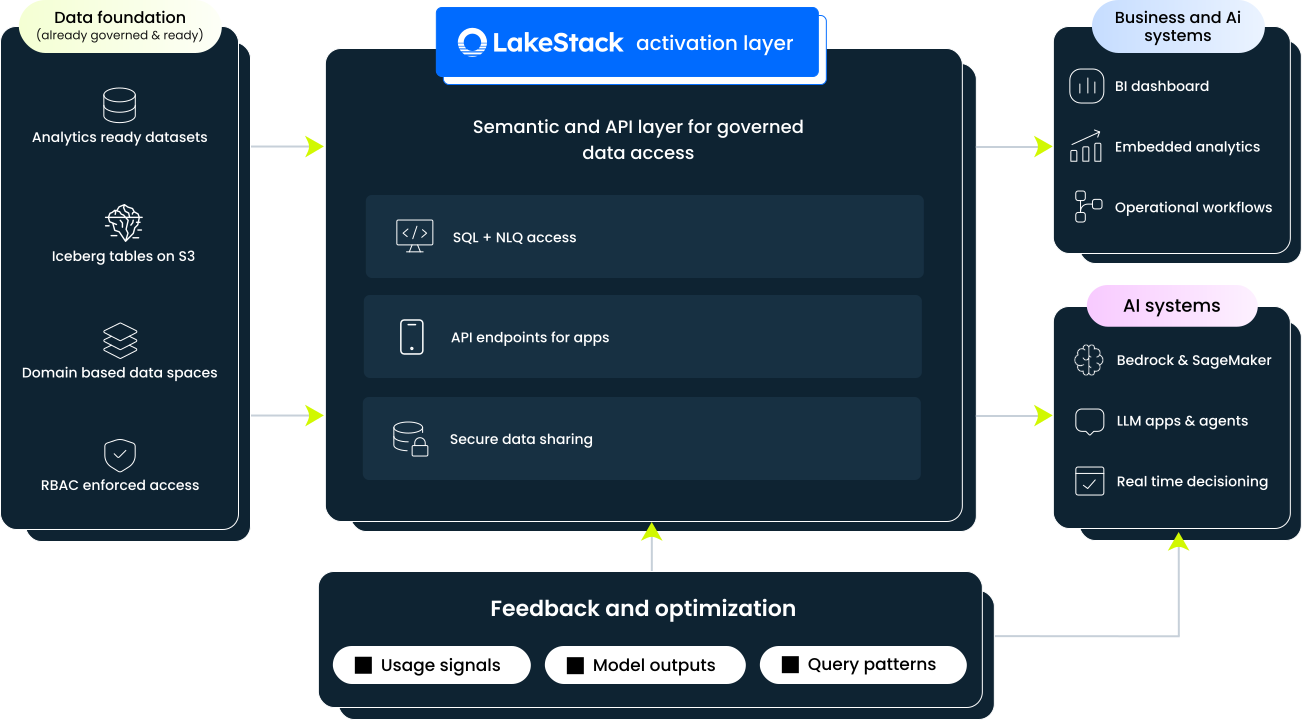
Move from data readiness to usage instantly
LakeStack turns prepared data into usable outputs across analytics, applications, and AI without creating separate pipelines. Every use case runs on the same governed data, eliminating duplication, sync delays, and tool-specific logic.

Centralize business logic and metric definitions once, then enforce them across every dashboard and report. This semantic layer ensures consistency across tools like QuickSight, Tableau, Power BI, and Looker, so every team works from the same numbers without reconciliation.

Expose governed datasets as versioned REST or GraphQL APIs with access control and masking applied automatically. Applications and workflows consume live, governed data directly, without building or maintaining separate backend services, sync jobs, or integration layers.

Use governed datasets directly for AI, including model training, retrieval augmented generation, and agent workflows. There is no separate data preparation layer, feature store, or pipeline required. AI systems operate on the same data used across analytics and applications, ensuring consistency and faster time to production.

Enable users to query live data in plain language, removing dependency on SQL, analysts, and engineering for everyday queries. This expands access beyond analysts and removes delays for everyday decision-making.

Enforce access control, security policies, and compliance consistently across analytics, APIs, operational systems, and AI. Governance is applied once and carried across every interface, eliminating duplication and reducing risk.

Push governed data back into operational systems like Salesforce, HubSpot, and Zendesk without a separate reverse ETL tool. There are no additional pipelines, contracts, or sync layers to manage. Operational systems stay aligned with the same data used in analytics and AI.
What customers actually experience after deployment
A strong data foundation does more than organize data. It changes how quickly teams can act, how much engineering is required, and how reliably insights are delivered.
What changes when pipelines, duplication, and delays are removed
Where activated data drives real impact
Build copilots for sales, support, and operations that use your internal data to answer questions, assist workflows, and drive decisions in real time.
power LLM applications with accurate, up-to-date business data across documents, systems, and datasets without building separate pipelines.
Deliver dashboards that reflect live business performance across functions without delays, refresh cycles, or data inconsistencies.
Combine data across touchpoints to create unified customer views and enable personalization, targeting, and lifecycle insights.
Trigger actions, recommendations, and alerts based on continuously updated data across systems and workflows.
Integrate analytics directly into internal tools or customer-facing products using live, governed data.

.png)

Frequently asked questions
No. LakeStack removes the need for reverse ETL and separate pipelines by making governed data directly usable across analytics, applications, and AI. Data can still be delivered to external systems, but without additional tools or pipeline maintenance.
Yes. LakeStack connects directly to QuickSight, Tableau, Power BI, Looker, and any BI tool that speaks SQL or standard protocols. For AI, the same governed foundation serves SageMaker, Bedrock, OpenAI, Anthropic, and other AI platforms without a separate data preparation step. Governance policies, access control, masking, and permissions apply automatically regardless of which tool is consuming the data.
Yes. LakeStack enables continuous data availability, so dashboards, applications, and AI systems operate on the latest data instead of delayed snapshots.
Governance is applied centrally and enforced consistently across analytics, APIs, and AI. Access control, masking, and compliance policies are defined once and carried across every use case.
LakeStack allows multiple teams, applications, and AI systems to use the same data simultaneously. There is no need to duplicate data or build separate pipelines as usage expands.
Go from data to outcomes in weeks
You already have the data. LakeStack helps you use it across analytics, applications, and AI without building pipelines, duplicating data, or managing multiple tools.


