


Your systems aren’t disconnected. Your foundation is.
ERP, CRM, SaaS apps, databases, APIs, files, and hybrid systems should not require endless custom connectors, brittle pipelines, or repeated engineering cycles just to move data. Connect fragmented systems into one governed ingestion layer in days, not months.

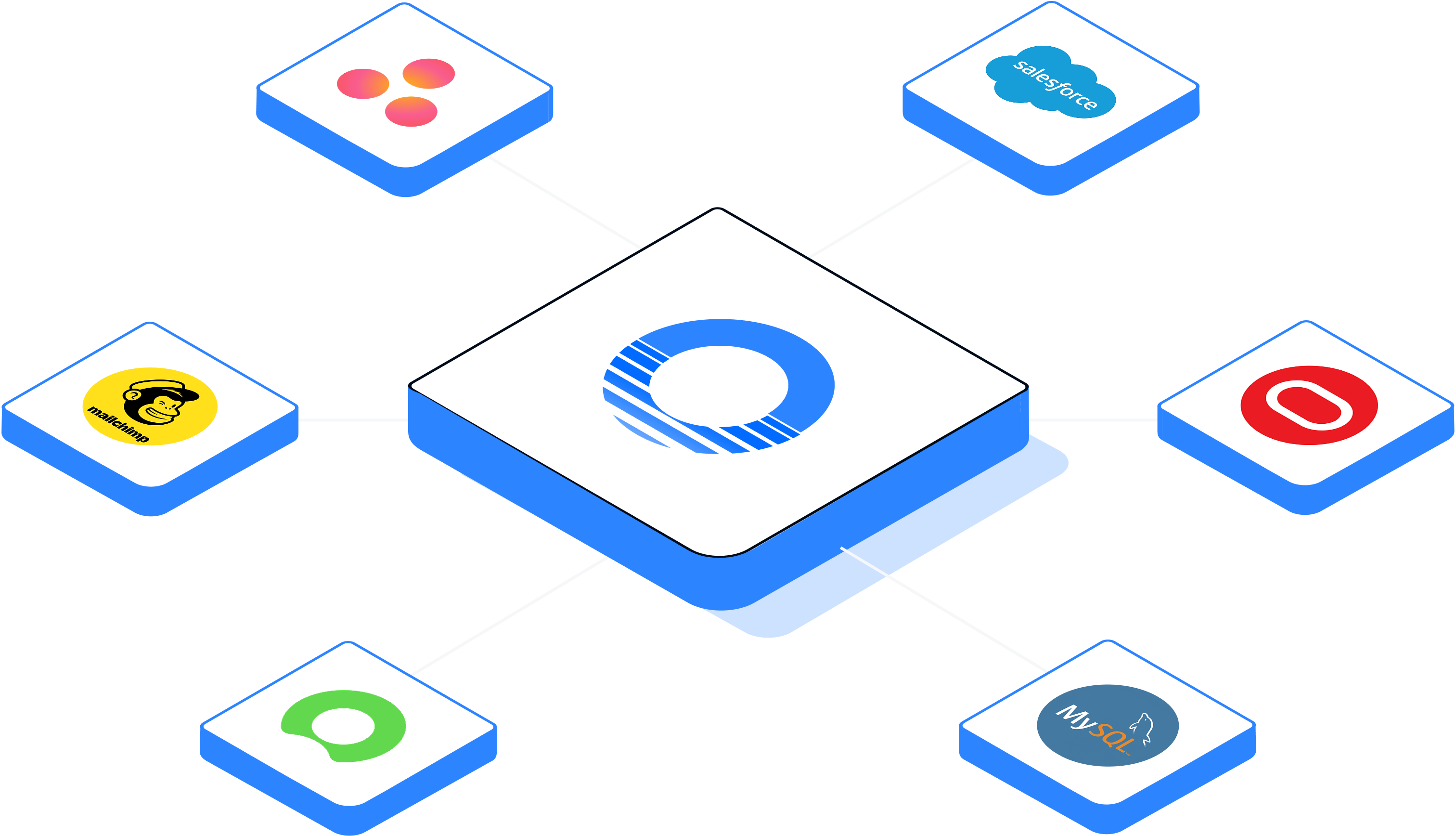
The problem isn't availability. It's access.
The challenge is rarely data availability. It is the inability to connect fragmented systems fast enough, reliably enough, or securely enough to create usable business intelligence.

ERP, CRM, SaaS, on-prem systems, APIs, IoT, and file ecosystems introduce incompatible formats, inconsistent APIs, and schema drift that repeatedly slow ingestion.

Engineering teams spend 70–80% of their time maintaining brittle connectors, manual ETL, and source-specific integrations instead of enabling strategic data initiatives.

Point-to-point integrations create security blind spots, inconsistent lineage, fragmented access controls, and greater compliance risk.

Disconnected systems create inconsistent reporting, stale decision-making, and conflicting operational truths across departments.
Ingestion stops being an engineering problem. It becomes infrastructure.
The goal is not adding more connectors. It is replacing fragmented ingestion complexity with one scalable “source integration framework”.

Supports batch, CDC, APIs, streaming, file ingestion, and hybrid coexistence through one unified connectivity model. Every system, regardless of age, protocol, or format, connects without a bespoke build.

Automatically detects schema changes, API inconsistencies, and source evolution before they break downstream systems. Upstream changes don't become downstream emergencies.

Standardize formats, deduplicate records, and resolve entities across systems like SAP, Salesforce, and operational platforms automatically. Analytics runs on a single, consistent version of truth, not whichever system was queried last.

Define desired outcomes while LakeStack generates and manages ETL, SQL, and transformation logic underneath. Your data engineers spend time on strategy, not plumbing.
Without the custom builds, brittle pipelines, or repeated cycles
LakeStack connects enterprise, operational, SaaS, industrial, and file-based systems into one governed ingestion layer without requiring source-by-source custom engineering.









Compliance shouldn't be an afterthought to integration
Every new source you connect is a new risk surface. LakeStack embeds governance into ingestion architecture so lineage, access controls, and compliance grow with your ecosystem, not behind it.

LakeStack deploys inside your cloud VPC so enterprise data never leaves your controlled security perimeter.

Track every data movement, transformation, and dependency from ingestion through downstream activation.

Apply row, column, and system-level governance consistently across all connected systems.
Automatically catalog data sensitivity, business definitions, and source relationships through one governed glossary.
What changes when your data foundation works
Custom connectors, brittle ETL, and ongoing maintenance are expensive to build and more expensive to keep running. LakeStack removes that burden.
Connect fragmented enterprise ecosystems in weeks instead of spending 6-12 months building and maintaining integrations.
Reduce repetitive custom connector development, ETL maintenance, and ingestion overhead dramatically.
Reduce infrastructure overhead, consultant dependency, and connector sprawl through scalable ingestion architecture.
Accelerate reporting, analytics, and AI readiness by reducing ingestion and harmonization bottlenecks.
Teams running LakeStack aren’t building foundations. They’re shipping outcomes.


- 8+ PostgreSQL sources via LakeStack CDC - zero custom pipelines built
- Customer logistics dashboards: 3 days → 20 min to refresh
- Analytics infra scaled 10× in transaction volume - no re-engineering


- State program data unified in under 3 weeks without custom ETL.
- Reporting reduced from days to <4 hours with no manual exports.
- PHI-compliant governance live from Day 1, aligned with HIPAA and SOC.


- TMS, EDI & event streams unified - 1 analyst replaced a 3-person team
- Freight event lag cut from hours to under 5 minutes via streaming CDC
- Predictive delay models activated on governed freight data via Bedrock
Frequently asked questions
LakeStack replaces source-by-source integration dependency with reusable ingestion architecture that standardizes onboarding, schema adaptation, and harmonization structurally. Instead of expanding connector debt with every new system, organizations gain a scalable connectivity framework that reduces future operational drag. This shifts connectivity from repeated engineering effort into foundational infrastructure.
LakeStack embeds governance directly into connectivity architecture through centralized lineage, metadata observability, dynamic cataloging, fine-grained policy enforcement, and zero-egress deployment. This means data connectivity scales alongside compliance maturity instead of creating fragmented governance gaps. For enterprise leaders, this reduces audit complexity while improving policy consistency.
LakeStack harmonizes fragmented ERP, CRM, SaaS, operational, and legacy systems into one governed source layer that reduces conflicting metrics, duplicate entities, and disconnected reporting logic. This creates a more credible single source of truth across departments. For data leadership, this directly improves trust in analytics, forecasting, and executive decision-making.
Connectivity is the foundational prerequisite for all downstream intelligence systems. LakeStack transforms fragmented source ecosystems into governed, harmonized, analytics-ready, and AI-ready infrastructure faster, allowing organizations to move from source integration toward predictive analytics, RAG, and self-service systems without restarting foundational work later.
LakeStack’s schema-aware ingestion automatically detects structural changes and adapts target systems earlier, reducing pipeline failures and minimizing recurring engineering intervention.
The gap between your data and your decisions shouldn't be months wide.
If disconnected systems are slowing reporting, increasing engineering burden, or delaying strategic initiatives, the next step is understanding where your connectivity ceiling exists today.


