


Your data project isn’t failing. It’s unfinished.
Most data modernization projects don’t fail; they stall under connector debt, schema drift, and governance delays. LakeStack helps teams modernize legacy and fragmented infrastructure faster, without rebuilding from scratch.

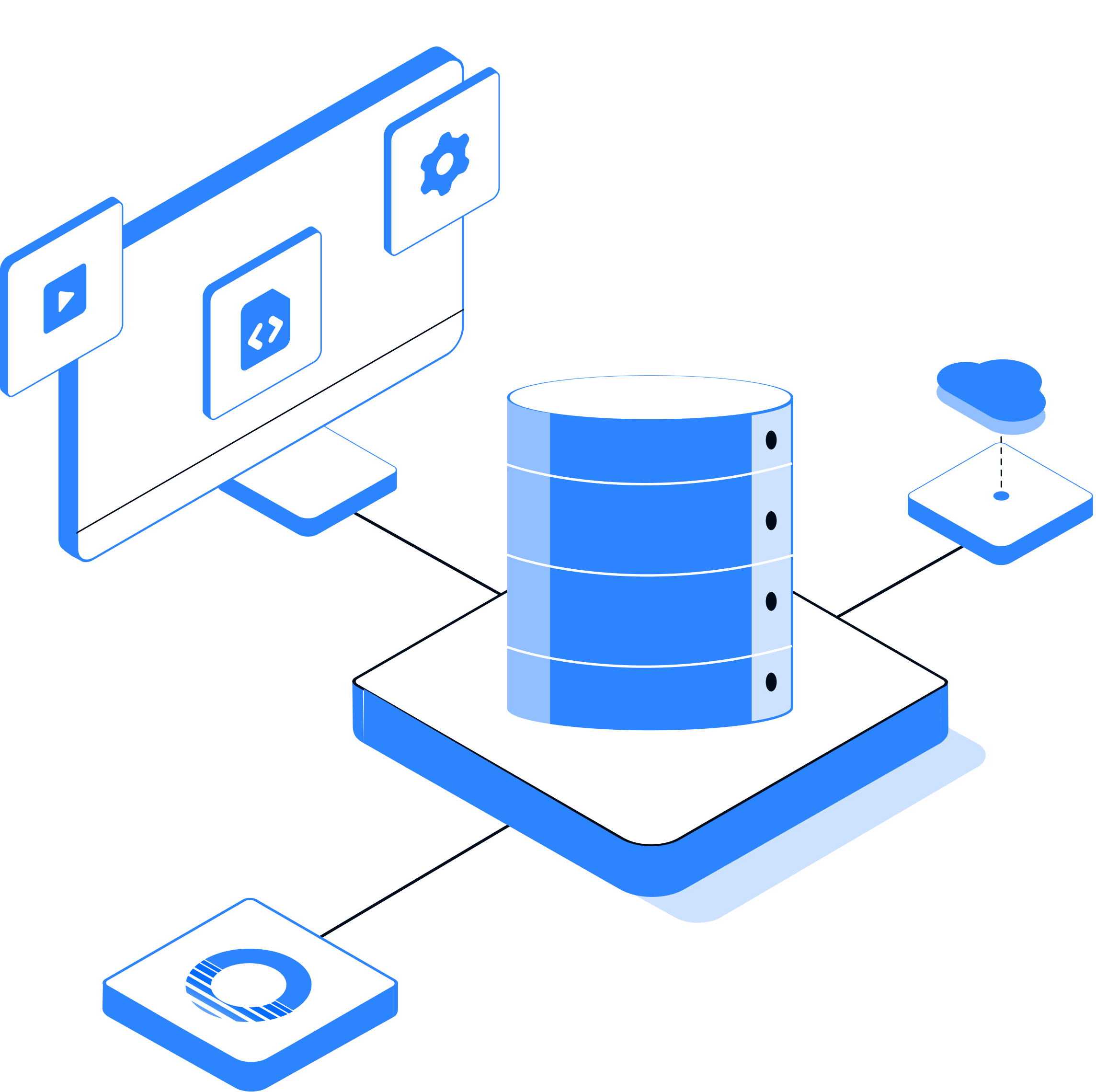
Modernization works when infrastructure becomes a system
The fastest path is not rebuilding every technical layer manually. It is structurally completing the foundation underneath existing business systems.
LakeStack programmatically provisions a complete data environment directly within your organization's virtual private cloud (VPC), ensuring the platform manages the compute while you retain 100% data residency.
- Zero-Egress Architecture: The stack is deployed via a marketplace template into your private environment; data never leaves your security perimeter.
- Infrastructure-as-Code (IaC) Abstraction: It automatically links object storage (data lake), serverless compute (ETL), and massively parallel processing (warehouse) components without manual scripting.
- Plug-and-Play Scalability: Compute and storage are decoupled at the architectural level, allowing the environment to auto-scale based on workload intensity.
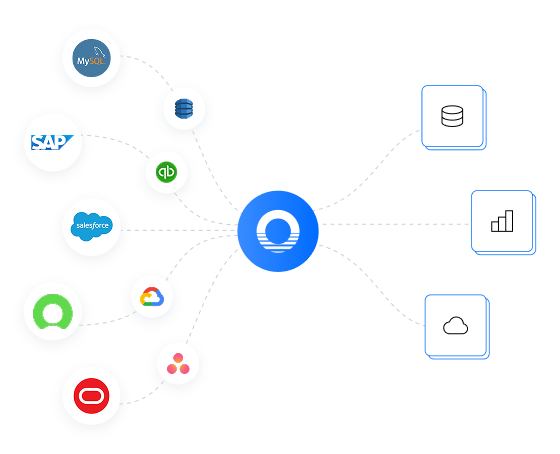
The platform automates the transformation of raw data into high-quality, analytics-ready assets by enforcing a structured Medallion framework through a visual interface.
- Schema Drift Management: Ingestion engines automatically detect changes in source data structures and adjust target tables to prevent pipeline breakage.
- Automated Harmonization: The "Silver" layer automatically deduplicates, standardizes formats (e.g., ISO dates), and resolves entity conflicts across disparate sources (e.g., merging SAP and Salesforce records).
- Declarative ETL: Users define the outcome (e.g., "Aggregate monthly revenue"), and the engine generates the underlying SQL/Spark code to execute the multi-stage join and load logic.
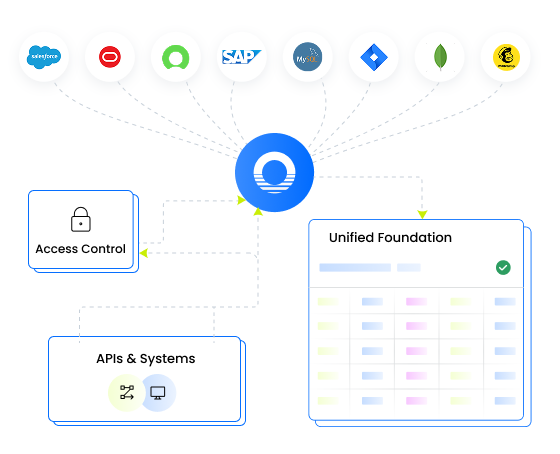
Modernization often leads to fragmentation; LakeStack solves this by embedding a centralized governance layer that tracks every byte of data from ingestion to consumption.
- Fine-Grained Access Control (FGAC): Policies are defined at the row and column level and enforced consistently across all BI tools and AI models.
- Automated Lineage Tracking: The platform maintains a technical audit trail showing the "path of travel" for every data asset, which is critical for regulatory compliance (GDPR/HIPAA).
- Dynamic Metadata Cataloging: It automatically tags data based on sensitivity and type, making the entire "Lakehouse" searchable via a unified business glossary.
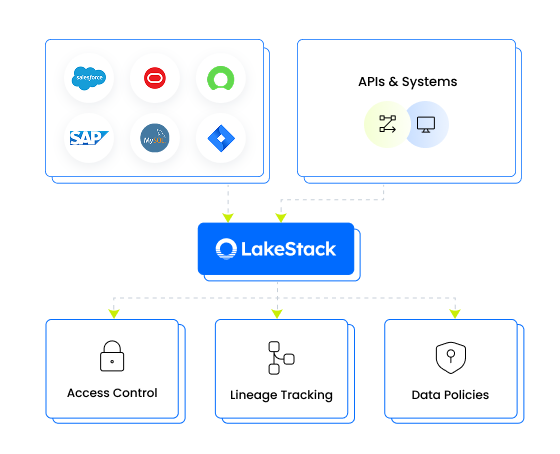
The endgame for LakeStack is to reduce the "Time-to-Insight" by providing a semantic layer that bridges the gap between raw database schemas and business logic for both humans and AI.
- AI-Driven SQL Translation: A built-in assistant utilizes LLMs to translate natural language questions into optimized, multi-join queries against the "Gold" data layer.
- Vector Integration: LakeStack prepares and structures data for "Retrieval-Augmented Generation" (RAG), allowing your internal AI models to query structured business data with context.
- One-Click AI Hooks: It provides native endpoints for machine learning services to pull "cleansed" features directly from the Lakehouse, bypassing the need for additional feature engineering.
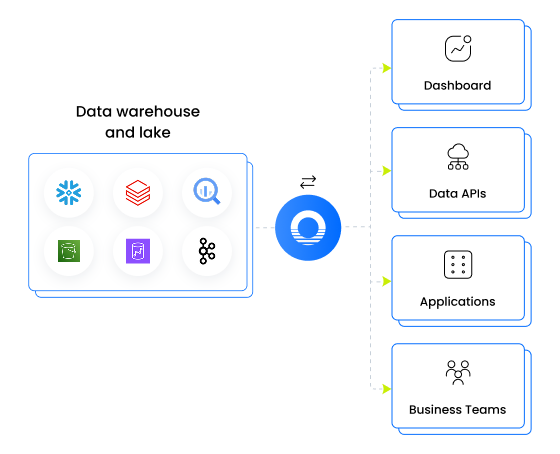
Most modernization projects slow down after early progress
Launching storage, connecting first systems, and delivering initial dashboards is rarely the hard part. The real challenge begins when fragmented infrastructure cannot scale into a governed, production-ready foundation.

ERP, CRM, on-prem databases, SaaS systems, and file ecosystems often require custom ingestion patterns that increase connector maintenance faster than modernization velocity.

Source systems evolve constantly, and without schema-aware ingestion, downstream pipelines repeatedly fail, creating operational drag instead of modernization progress.

Lineage, access controls, quality validation, and auditability are often postponed, creating larger security and governance risks later.

Manual ETL, custom orchestration, and brittle transformations turn modernization into infrastructure maintenance instead of strategic advancement.
LakeStack offers a pre-built and battle-tested data infrastructure
A finished foundation is measured by production speed, engineering reliability, and operational maturity, not by how many disconnected systems are partially working.
Move stalled projects from fragmented architecture toward production-ready modernization in weeks, not 180+ day rebuild cycles.
Reduce manual modernization burden by replacing repetitive plumbing with automated infrastructure layers.
Improve modernization economics through infrastructure efficiency, reduced consultant dependency, and scalable architecture.
Most LakeStack deployments recover total investment within six months, through engineering hours reclaimed, AI initiatives unblocked, and faster decisions on trusted data.
Teams running LakeStack aren’t building foundations. They’re shipping outcomes.


- State program data unified in under 3 weeks without custom ETL.
- Reporting reduced from days to <4 hours with no manual exports.
- PHI-compliant governance live from Day 1, aligned with HIPAA and SOC.


- TMS, EDI & event streams unified - 1 analyst replaced a 3-person team
- Freight event lag cut from hours to under 5 minutes via streaming CDC
- Predictive delay models activated on governed freight data via Bedrock


- 8+ PostgreSQL sources via LakeStack CDC - zero custom pipelines built
- Customer logistics dashboards: 3 days → 20 min to refresh
- Analytics infra scaled 10× in transaction volume - no re-engineering
Modernization is not the finish line. It’s what becomes possible after.
A completed foundation does more than fix fragmented infrastructure; it unlocks enterprise-wide intelligence, faster execution, structural governance, and production-grade AI.

When disconnected systems become one governed foundation, data stops living in silos and starts operating as a real-time business intelligence layer.


Modernization should not create larger governance burdens; it should make governance structurally automatic.

Most AI projects fail because infrastructure maturity lags behind ambition. A finished modernization foundation changes that.

Once modernization removes repetitive engineering overhead, teams stop maintaining fragmented pipelines and start building reusable systems faster.
Modernization changes outcomes across every stakeholder
Stalled modernization affects leadership, technical execution, architecture maturity, and business delivery differently. A finished foundation improves each layer in distinct ways.




Frequently asked questions
No. Most stalled projects already contain valuable business logic, source integrations, and use cases. LakeStack preserves differentiated systems while replacing fragmented infrastructure layers that are slowing modernization down. This reduces rebuild risk while accelerating production timelines.
Yes. LakeStack supports phased modernization through parallel ingestion, historical syncing, and legacy coexistence. Teams can modernize source systems progressively without operational shutdown, reducing migration risk while maintaining continuity.
Schema-aware ingestion and structural standardization reduce recurring downstream breakage by adapting to evolving source structures earlier. This minimizes manual rewrites while preserving governance and data continuity.
Historical, live, and hybrid systems are unified into one governed foundation so modernization does not create fragmented operational or reporting histories. This preserves continuity while improving usability.
Most projects stall because teams keep rebuilding connectors, governance, schema handling, and pipelines manually. Modernization accelerates when those undifferentiated layers are replaced structurally instead.
Your project does not need another 12-month roadmap.
If your modernization effort is stuck between partial progress and production readiness, the next step is identifying what to preserve, what to replace, and how to modernize faster.


