


Transform your data into analytics and AI-ready datasets
LakeStack gives you a foundation where raw data is continuously standardized, modeled, and kept analytics-ready by default, without pipelines to build or maintain.
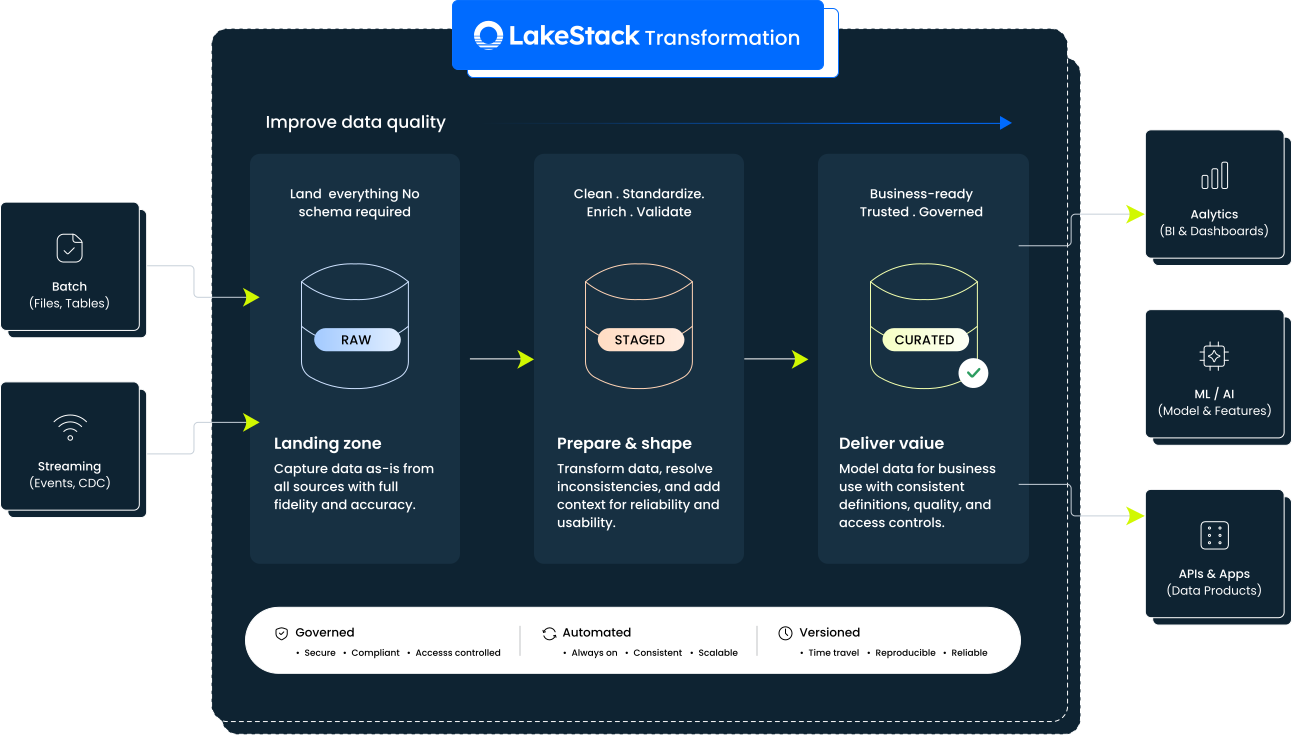
One shared dataset layer, already in place
It enables your different teams to work from the same consistent data, without rebuilding transformations for every dashboard, model, or request.


Transformation runs as part of the system
Data is continuously structured, validated, and kept analytics-ready without pipelines to design, schedule, or maintain.
What changes for your team
When transformation runs as part of the system instead of pipelines, there’s less to maintain, fewer failures, and faster delivery of new use cases.
What you can do when your data is ready
Because your data is already structured, governed, and consistent, you can use it directly across analytics and AI without reworking it for each use case.
Use structured internal data to fine-tune or ground models on your business context, products, operations, and domain knowledge.
Enable accurate, real-time RAG pipelines where LLMs retrieve information from transformed datasets instead of relying on static or outdated training data.
Allow business users to interact with data in plain English, powered by consistent schemas and well-structured underlying datasets.
Build internal copilots for sales, operations, support, or analytics that deliver contextual responses grounded in unified, trusted data.
High-quality, standardized datasets reduce noise, minimize hallucinations, and improve the precision of AI-generated outputs.
Feed real-time transformed data into AI systems that trigger recommendations, alerts, and automated actions across business processes.
Combine transactional, event, log, and document data into a unified layer that enables broader contextual reasoning across AI systems.
Standardize metrics, definitions, and data structures across systems so every team, dashboard, and model operates on the same consistent data foundation.
.png)


Frequently asked questions
No. You retain full control over your data and transformation logic within your environment. LakeStack reduces the need to manage pipelines, but it does not restrict how you define or apply business logic. The goal is less operational overhead, not less control.
Data quality is enforced as part of the transformation layer through standardized rules and consistency checks. Instead of handling validation separately in multiple pipelines, quality is applied centrally, ensuring reliable data across analytics and AI use cases.
LakeStack is designed to handle schema changes and evolving data structures without breaking downstream usage. Since transformations are not tied to fragile pipelines, updates can be applied centrally without cascading failures across systems.
dbt helps manage transformation logic, but you still need to build, orchestrate, and maintain pipelines around it. LakeStack goes further by providing a complete transformation system where logic, orchestration, and consistency are handled together, reducing the need for additional tooling and maintenance.
Yes. LakeStack ensures data is consistently structured and governed, so it can be used across both reporting and AI systems without separate preparation layers. This avoids duplication and ensures all use cases operate on the same data foundation.
See LakeStack in action with your data
Get a clear view of how your current data setup can be structured, standardized, and automated without pipeline overhead. We’ll review your existing architecture and show what changes with LakeStack.


